
Managing access to vast online resources without compromising security is crucial. The OAuth 2.0 authorization framework has redefined secure, efficient, and user-friendly access management across multiple platforms. From web applications to mobile devices, it facilitates seamless integration and access control, ensuring that user data remains secure while providing a flexible framework for developers.
What is OAuth 2.0?
OAuth (Open Authorization) 2.0 is an authorization framework that has become the industry standard for securely authorizing access to web resources without sharing password credentials. OAuth 2.0 was developed to address the shortcomings of OAuth 1.0. It simplifies client development by offering distinct authorization flows tailored for web applications, mobile applications, desktop applications, and more.
OAuth 2.0 is the […] industry standard for securely authorizing access to web resources without sharing password credentials.

How is OAuth 2.0 Used?
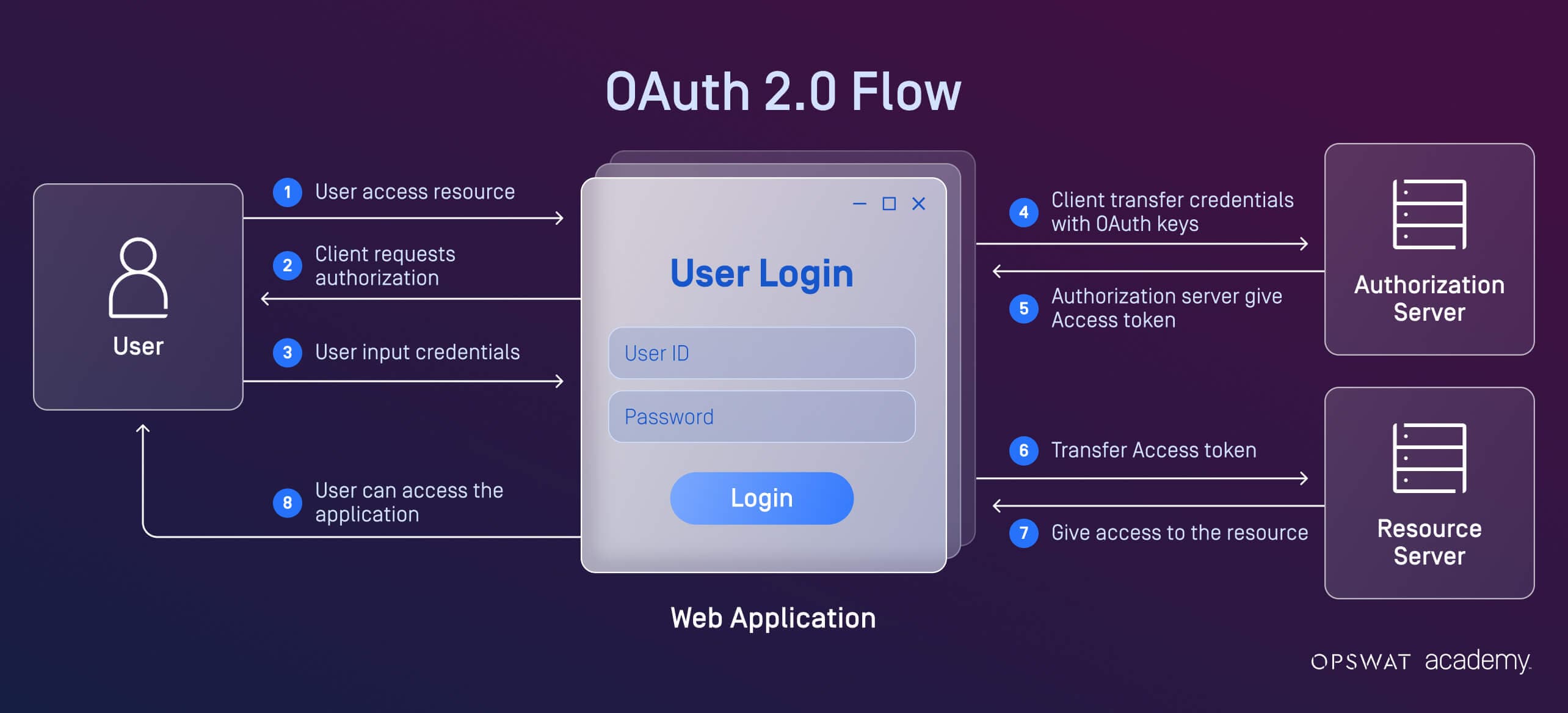
OAuth 2.0 is primarily used as a protocol to enable secure authorization of resources across different applications, without exposing user passwords. It allows third-party services to exchange web resources on behalf of a user, or to gain access to a user's resources without the user needing to share their credentials directly with the third party.
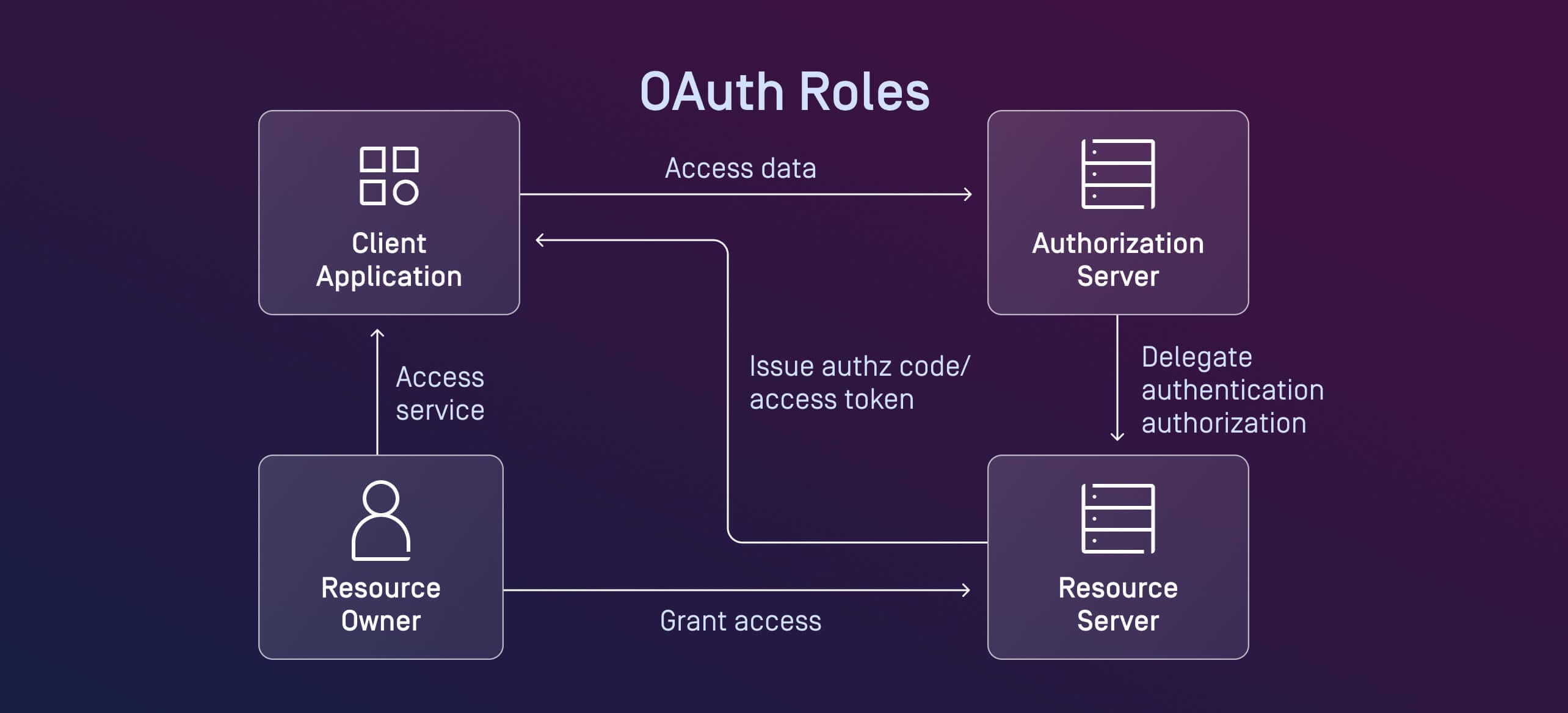
This is commonly seen in scenarios where a user logs into an application using their credentials from a service like Google, Facebook, or Microsoft. The protocol defines roles for a client (the application wanting access), a resource owner (the user), and an authorization server (which issues tokens after authenticating the user). OAuth 2.0 simplifies the development of client applications by abstracting the details of how the access to resources is managed.
What is the Difference between OAuth 1.0 and OAuth 2.0?
OAuth 1.0 and OAuth 2.0 differ primarily in their security mechanisms, simplicity, and flexibility. OAuth 1.0 employs a complex signature-based method requiring cryptographic operations to ensure data integrity and authenticity, whereas OAuth 2.0 uses SSL/TLS (HTTPS) for security, making it simpler by relying on secure data transmission without the need for signatures.
OAuth 2.0 also introduces a clearer separation between access tokens and refresh tokens, enhancing token management. Additionally, it offers greater flexibility by supporting various grant types to accommodate different client types and application scenarios, improving user experience, particularly in modern web and mobile environments. This flexibility and simplification have made OAuth 2.0 more popular and widely adopted for implementing authorization and delegation in contemporary applications.
…flexibility and simplification have made OAuth 2.0 […] popular and widely adopted for implementing authorization and delegation in contemporary applications.
Common Pitfalls and Security Concerns
While OAuth 2.0 offers robust capabilities, it is not without challenges, especially regarding secure implementation. Common issues include security vulnerabilities such as access token leakage, where tokens can be intercepted or wrongly exposed, risking unauthorized access.
Redirect URI manipulation is another risk, where an attacker can alter the redirect URI in client requests to redirect sensitive information to malicious sites. Additionally, the framework's reliance on short-lived tokens and refresh tokens can lead to complexity in managing token renewal and storage securely.
OAuth 2.0 is primarily for authorization, not authentication, though it is commonly used for the latter by issuing tokens that verify user identity. For more direct authentication, OpenID Connect (OIDC), built on top of OAuth 2.0, provides a specific identity layer with identity tokens (ID Tokens). Therefore, OpenID Connect or similar protocols should be used for secure and standard authentication practices.
While OAuth 2.0 offers robust capabilities, it is not without challenges.
Lastly, insufficient scope restrictions can lead to overly broad access to third-party applications, thereby increasing the risk of data exposure. These vulnerabilities necessitate careful implementation and robust security measures to mitigate potential risks associated with OAuth 2.0.
The Evolution of OAuth 2.0
OAuth 2.0, an essential framework for modern authorization, is continuously evolving, with initiatives like OAuth 2.1 aimed at simplifying and enhancing the protocol to better meet community needs. It has revolutionized authorization practices, supporting diverse use cases and safeguarding user data across interconnected digital platforms.
OAuth 2.0 is an essential framework for modern authorization.
OAuth 2.0 has a critical role in digital security, beneficial for both developers and those curious about online data protection. As digital security becomes more complex, OAuth 2.0 remains a cornerstone of robust and adaptable authorization techniques, paving the way for future advancements with the upcoming OAuth 2.1.
As previously noted, OAuth 2.0 is intended primarily for authorization rather than authentication. To correctly address authentication, OpenID Connect (OIDC) is designed to operate atop OAuth 2.0. This configuration enhances security and ensures proper user identity verification.
OPSWAT and OAuth 2.0
As a permission delegation solution for inter-application interactions, OPSWAT employs OAuth 2.0 to facilitate role-based delegation within its suite of products. This protocol ensures that applications can securely request access to resources on behalf of a user without exposing user credentials.
By utilizing OAuth 2.0, OPSWAT enhances its security framework, allowing for scalable and controlled access management across various applications. This integration simplifies the user experience by minimizing the need for multiple logins and strengthens the overall security posture by enforcing strict access controls and permissions based on predefined user roles.
The OPSWAT Academy Way
If considering enhancing your basic to intermediate-level Critical Infrastructure Protection (CIP) cybersecurity skills, explore the OPSWAT Academy’s Associate Course Program, which offers a thorough foundation in cybersecurity principles and practical skills.
However, if you want to specialize further, explore the OPSWAT Academy Expert Course Program for advanced topics, or the OPSWAT Academy Professional Course Program for comprehensive training on deploying OPSWAT products.
Conclusion
In conclusion, OAuth 2.0 stands as a pivotal advancement in digital authorization, streamlining and securing access to web resources in an increasingly interconnected world. Its ability to adapt to various application scenarios while maintaining user security without the complexities of direct credential sharing underscores its value and indispensability.
Despite its challenges, which require vigilant management and security practices, OAuth 2.0 continues to evolve, anticipating further enhancements with OAuth 2.1. For developers and users alike, understanding and implementing OAuth 2.0 is crucial for safeguarding digital identities and facilitating seamless online experiences. As we navigate the digital age, the principles and practices laid out by OAuth 2.0 will undoubtedly play a critical role in shaping the future of online authorization.
To expand your cybersecurity expertise and deepen your understanding of authorization, enroll in the OPSWAT Academy Associate Courses.


